Walk into almost any older home in Dilworth, Myers Park, or Plaza Midwood and there’s a good chance you’ll find oak floors that have been there for generations. They may look tired, scratched, or a little gray, but underneath that worn surface there is often a floor with decades of life left in it. At Fabricio Hardwood Floors, one of the most common questions we hear from Charlotte homeowners is a simple one: should I refinish what I have, or tear it out and start over?
The honest answer is that most solid hardwood floors can be saved, and saving them is usually the smarter choice. Still, there are times when replacement really is the better path. Knowing the difference can save you thousands of dollars and help you get the floors you actually want.
Why refinishing is so often the right call
Solid hardwood is one of the few building materials that can be renewed again and again. A typical three-quarter-inch solid oak plank has enough wood above the tongue and groove to be sanded and refinished several times over its lifetime. Each refinish removes only a thin layer of wood, taking scratches, stains, and dull finish with it and revealing fresh, clean wood underneath.
That means a floor that looks hopelessly beaten up is often just suffering from a worn-out top coat. Years of foot traffic, pet nails, sliding furniture, and sunlight from big Carolina windows wear down the protective finish first. Once the finish fails, dirt and moisture start working into the wood, and the floor begins to look much older than it really is. A full sand and refinish resets the clock.
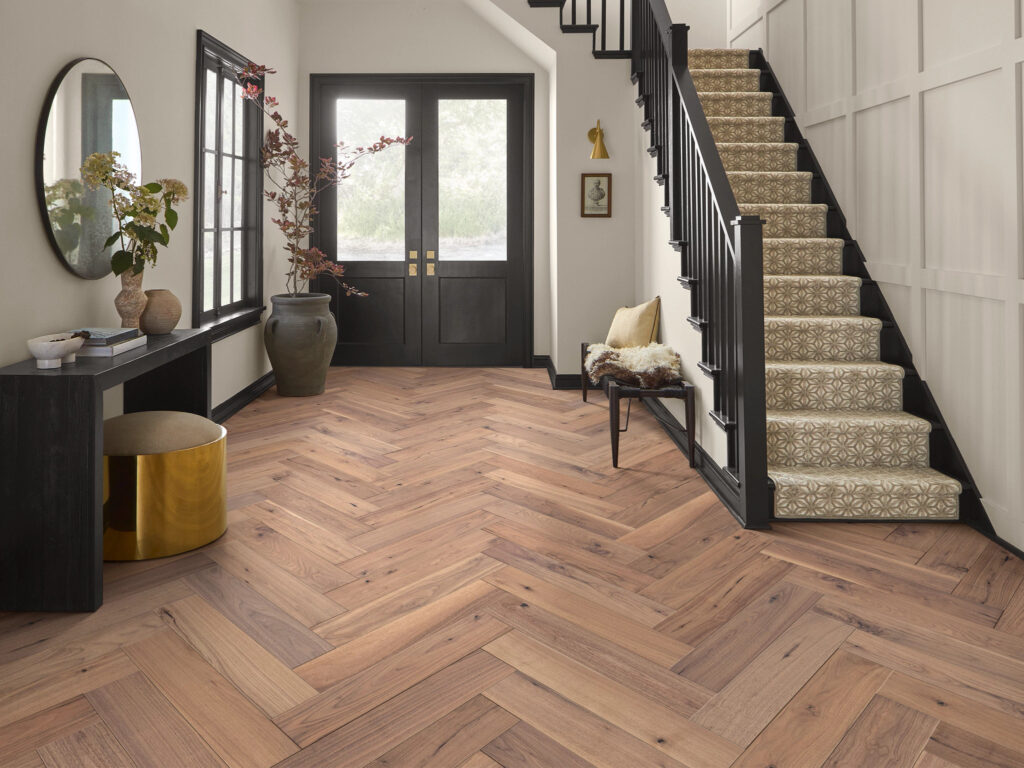
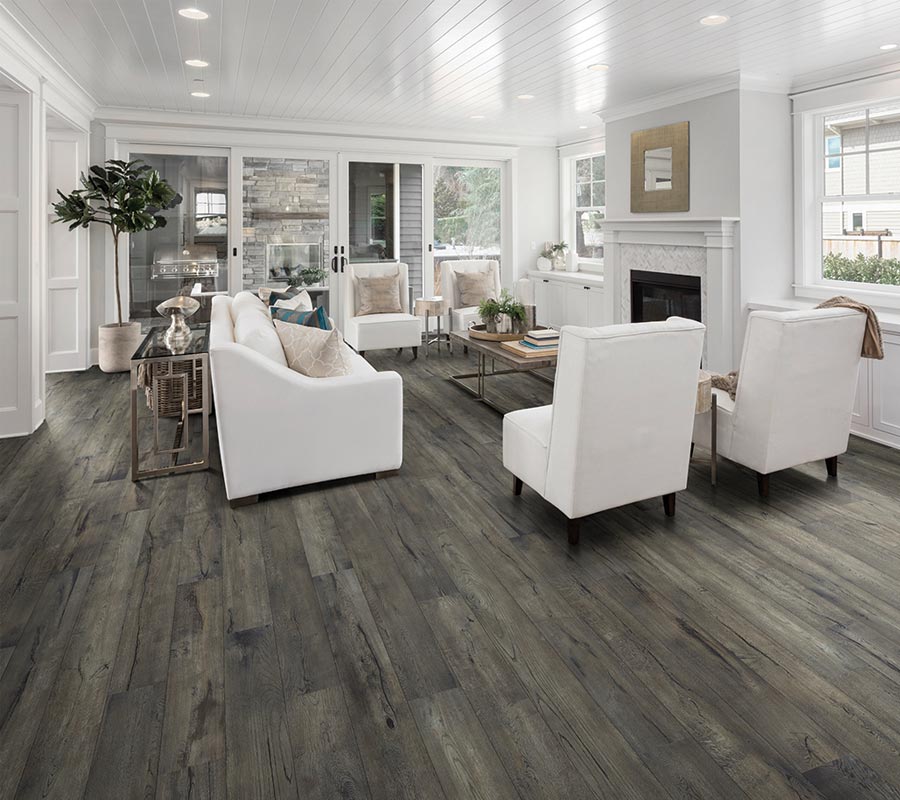
Refinishing also gives you a chance to change the whole look of a room. If your floors were finished in the honey-orange tone that was popular a few decades ago, you can move to a modern natural matte, a warm mid-tone brown, or a deep espresso without replacing a single board. For many homeowners in Elizabeth or NoDa who want to keep the character of an older home while updating its style, this is the best of both worlds.
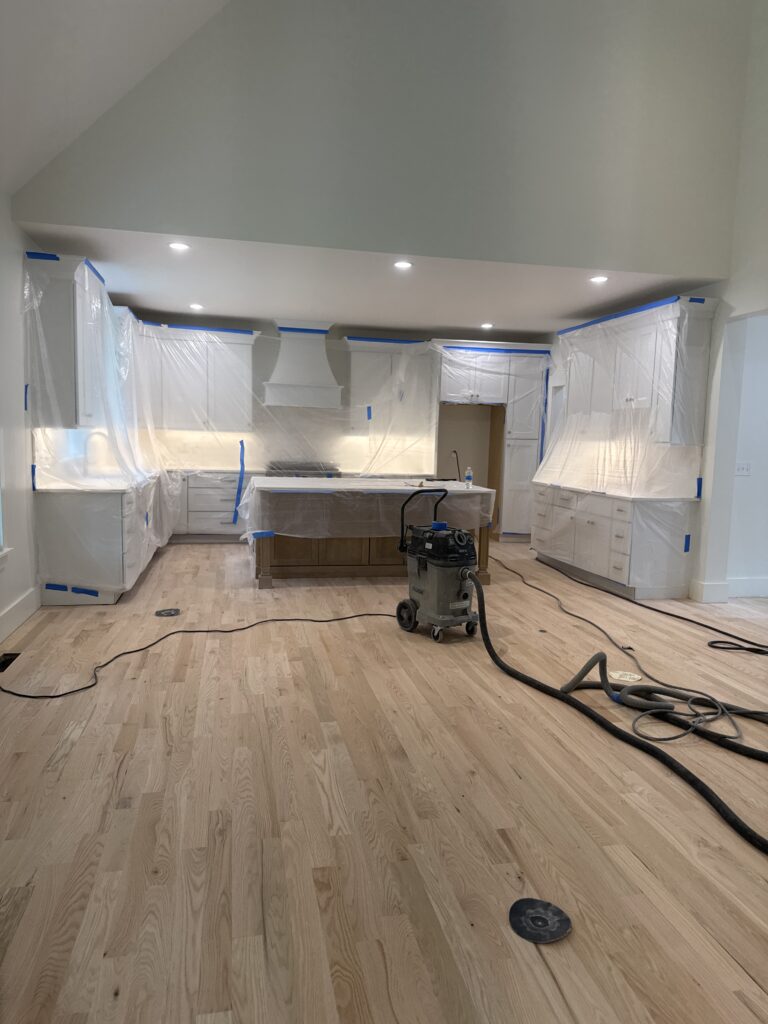
Cost is another big reason. Refinishing typically costs a fraction of what new hardwood costs to buy and install, and it usually takes days rather than weeks. There is also less waste going to the landfill, and you keep original materials that often can’t be matched with today’s lumber, such as old-growth oak with its tight, beautiful grain.
Signs your floors are good candidates for refinishing
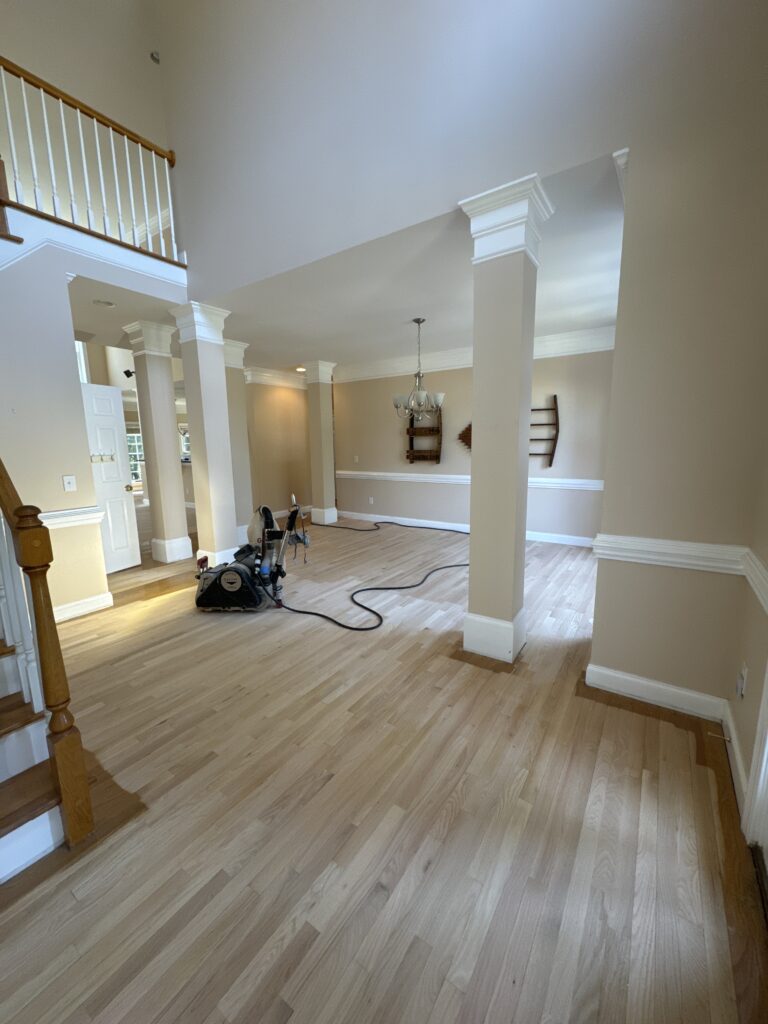
If your floors are structurally sound but cosmetically worn, refinishing is almost always the answer. Surface scratches, dull or cloudy finish, light water marks, minor pet damage, and fading from sunlight all fall into this category. Even boards that have grayed or darkened in high-traffic paths usually sand back to clean, healthy wood.
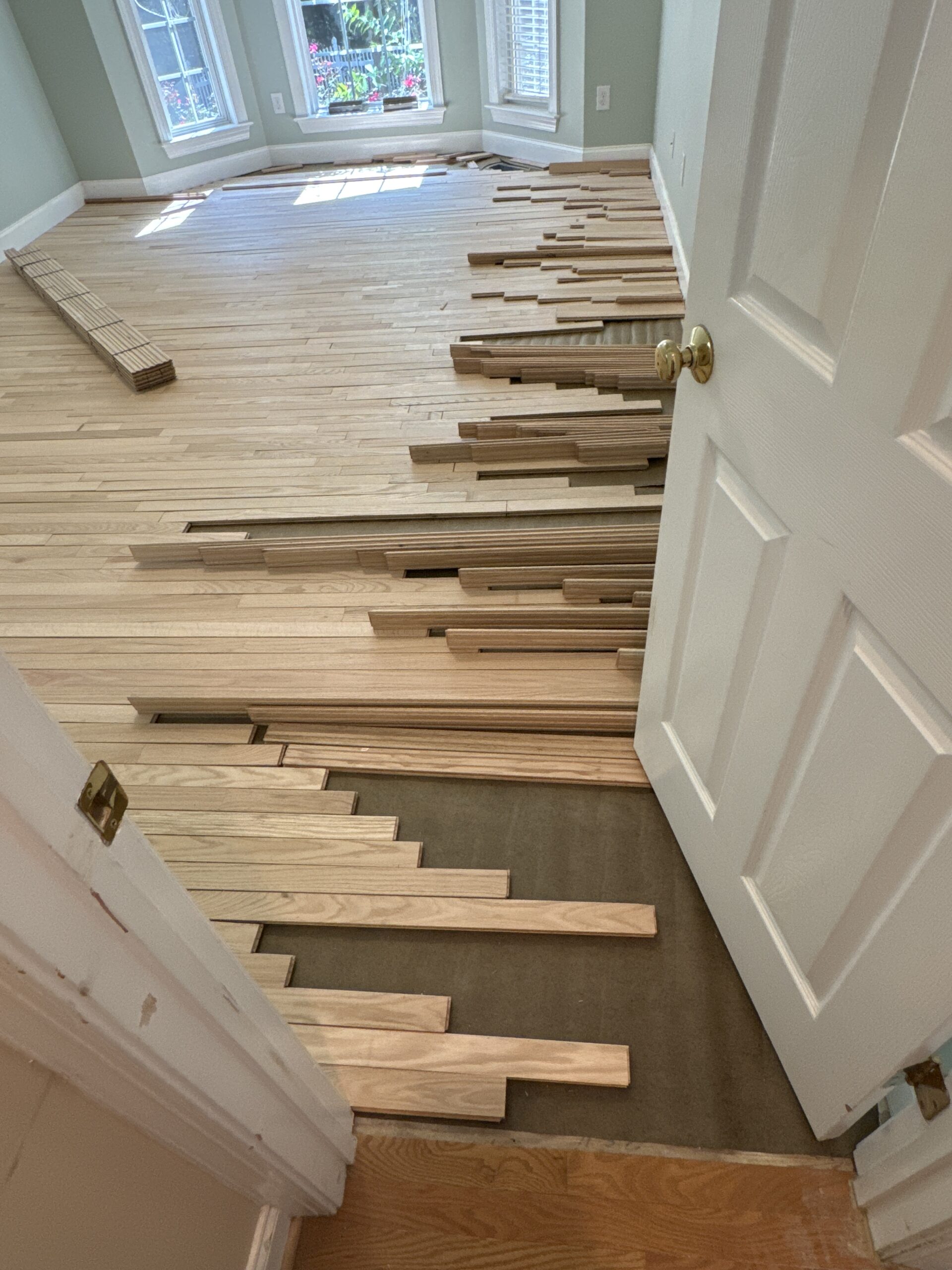
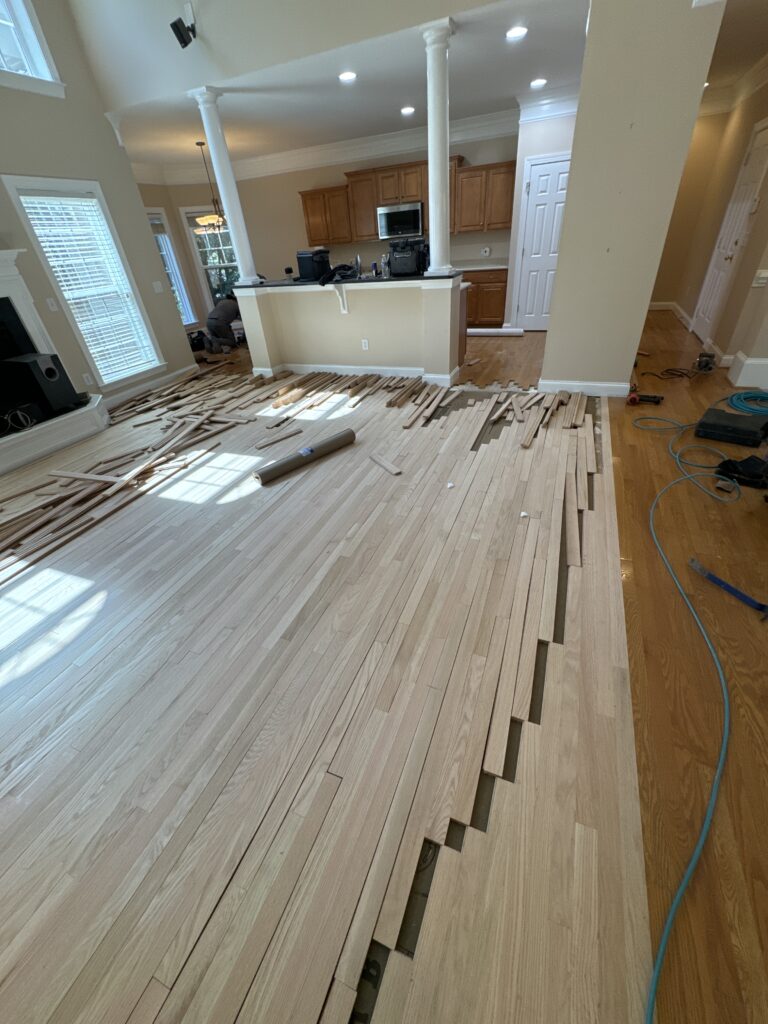
A few damaged boards don’t mean the whole floor needs to go, either. Our team can remove and replace individual planks that have deep stains, cracks, or rot, weaving in matching wood before sanding so the repair blends seamlessly once the new finish goes on. This kind of targeted repair is common in older Charlotte homes, especially near doorways, kitchens, and anywhere a leaky appliance once sat.
When Replacement Makes More Sense
There are situations where refinishing simply can’t deliver the result you need. The first is when the floor has already been sanded so many times that there isn’t enough wood left above the tongue. If you can see the tops of nails or the tongue edges starting to show, another sanding could break through and ruin the boards.
The second is serious water damage. Charlotte’s long, humid summers are hard on wood floors, and many homes in the area sit over crawl spaces that can trap moisture. A little seasonal movement is normal, but boards that are severely cupped, crowned, buckled, soft, or black with mold point to a deeper problem. In these cases the moisture source has to be fixed first, and the damaged flooring often needs to be removed. Sometimes we find that the subfloor beneath has also been compromised, which makes replacement the only responsible option.
The third situation involves engineered hardwood. Many newer homes in Ballantyne, Huntersville, and Cornelius were built with engineered floors, which have a real wood layer bonded on top of a plywood core. Some engineered floors have a thick enough wear layer to be refinished once or twice, but others have such a thin veneer that sanding isn’t possible. A quick inspection tells us which type you have.
Finally, sometimes replacement is about the layout or the look rather than damage. If you’re opening up walls, adding rooms, or want a completely different species or plank width, new flooring may better fit the vision for your home.
How Charlotte’s climate plays a role
Our region’s swings in humidity affect every decision about hardwood. In July and August, wood takes on moisture and expands. In winter, when the heat is running, it dries out and shrinks, which is why small gaps between boards appear in January and close up again by summer. That seasonal movement is natural and isn’t a reason to replace a floor.
What matters is whether the floor has moved beyond its normal range. Boards that stay cupped all year long, or gaps that keep widening season after season, suggest a moisture or installation issue that needs attention. Whether we refinish or replace, we always check moisture levels in the wood and subfloor so the finished floor performs well through every Charlotte season.
Let a professional take a closer look
It can be hard to judge a floor’s condition when you’re standing on it every day. Stains that look permanent often sand out completely, and boards that look fine can hide problems underneath. The best way to know for sure is to have an experienced flooring professional inspect it, check the remaining wood thickness, and look for any signs of moisture trouble.
At Fabricio Hardwood Floors, we help homeowners across Charlotte, from Matthews and Mint Hill to South End and the lake communities, make the right call for their floors and their budget. If your floors can be saved, we’ll tell you. If replacement is the better investment, we’ll explain why and help you choose a floor that will last for decades.
Ready to find out whether your hardwood floors have another life in them? Contact Fabricio Hardwood Floors today to schedule your free in-home evaluation. Call us at (704) 770-1028 or fill out contact form to get started.