The verdict is out and the most popular type of wood flooring in 2026 is engineered white oak. That one answer combines the fastest-growing construction method in the hardwood flooring market with the species that installers and homeowners choose more than any other. If you are planning a renovation, building a new home, or simply trying to understand which wood floors add the most value, this guide walks through the numbers behind the trend, the reasons it took hold, and what it means for your next project.
Hardwood has never really gone out of style, but the way people buy it has changed. Today’s buyers want real wood that looks natural, holds up to kids and pets, handles humidity swings, and installs without weeks of disruption. Engineered white oak checks every one of those boxes, which is why it now sits at the center of almost every 2026 flooring trend report.
The wood flooring market in 2026 by the numbers
Wood flooring is a growing global business, and engineered wood is now its biggest single product category. According to Mordor Intelligence, the global wood flooring market was valued at about $49.95 billion in 2025 and is estimated at $52.17 billion in 2026. The firm projects it will reach $64.84 billion by 2031, a compound annual growth rate of 4.44%.North America is the largest regional market, holding 31.38% of global wood flooring sales in 2025. Homeowners drive most of that demand, with residential projects making up 63.35% of the market. In the United States alone, the hardwood flooring sector supports roughly 45,000 jobs and contributes about $4 billion to GDP.
The most telling statistic is the product mix. Engineered wood accounted for 34.84% of the global market in 2025, making it the leading product type ahead of traditional solid hardwood. Pre-finished flooring, which arrives from the factory already stained and sealed, captured an even larger 71.27% share. Put those two facts together and the typical new wood floor in 2026 is an engineered plank that was finished in a factory before it ever reached the job site.

Installers see the same momentum on the ground. The National Wood Flooring Association (NWFA) reports that 60% of its contractors installed more wood flooring in 2025 than the year before, and its projections point to factory-finished engineered flooring as the format with the strongest demand growth in the year ahead (Floor Focus / NWFA).

Why engineered hardwood is winning
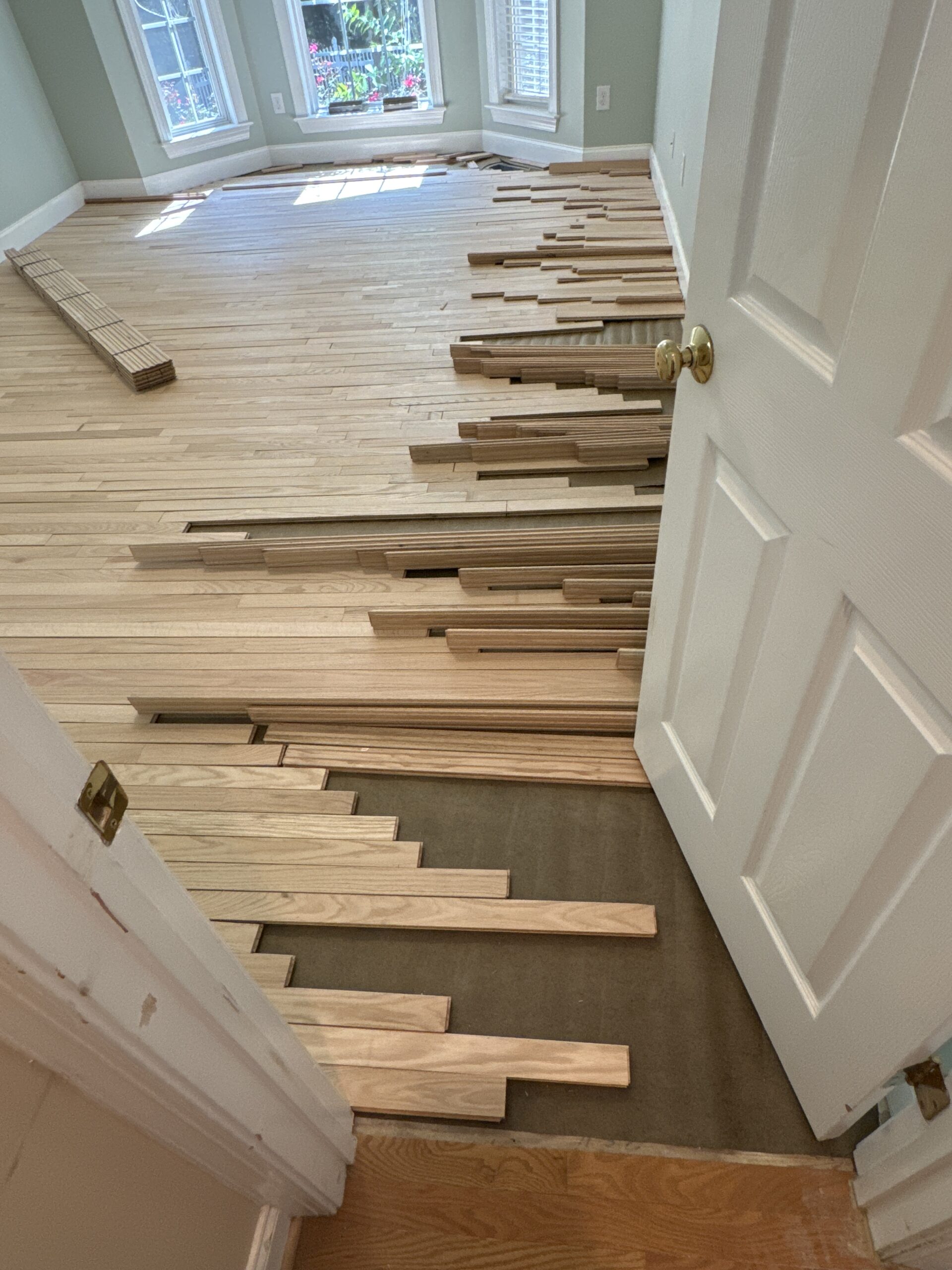
Engineered hardwood is real wood, just built differently. Each plank has a top layer of genuine hardwood, called the wear layer or veneer, bonded to a core of cross-layered plywood or high-density fiberboard. From the surface it looks and feels exactly like a solid board, because the part you walk on is solid wood. View some of our most recent white oak flooring installation.
The layered core is what gives engineered flooring its edge. Solid wood expands and contracts as humidity rises and falls, which can lead to gaps in winter and cupping in summer. Running the core layers in different directions counteracts that movement, so engineered planks stay flatter and more stable. That stability is why engineered products can go places solid hardwood usually cannot, including over concrete slabs, in basements, and over radiant heating systems. Mordor Intelligence specifically credits engineered wood’s suitability for at-grade and below-grade installation as a key reason it now leads the market.
Installation speed is the second big advantage. Many engineered products use floating or click-lock systems that snap together without nails or glue, and these methods are projected to be the fastest-growing installation type through 2031 at a 5.18% annual rate. Because most engineered planks come pre-finished, there is no on-site sanding, staining, or waiting days for coats of finish to cure. Homeowners can often walk on a new floor the same day it goes down, with far less dust and fewer fumes in the house.
Engineered flooring is no longer a short-lived compromise. Better products now carry thicker wear layers that can be sanded and refinished, and the NWFA runs an Engineered Wood Flooring Refinishable Program to help shoppers identify them. For many households, that combination of real wood beauty, flexible installation, and long service life makes engineered hardwood the obvious pick.

White oak: the most popular wood species of 2026
If engineered construction is the winning format, white oak is the winning wood. White oak is the preferred domestic species for 63% of NWFA members, who cite its versatility, stability, and attractive grain. No other species comes close to that level of preference among professionals.
The pattern holds outside the United States as well. In Europe, oak accounted for 83.8% of all species used in parquet production in 2024, and 83% of that production was multi-layer engineered flooring, according to Mordor Intelligence. In other words, engineered oak is not just an American trend but the global standard for wood floors.
Several qualities explain white oak’s dominance. It is hard and durable, rating around 1,350 to 1,360 on the Janka hardness scale, slightly harder than red oak at roughly 1,290. Its closed grain resists moisture better than many other species, and its neutral, slightly golden base color works with almost any design style. White oak also takes stain evenly, so it can be left natural, whitewashed, or darkened without looking blotchy. It is widely grown in North America, which keeps it available and reasonably priced compared with exotic hardwoods.
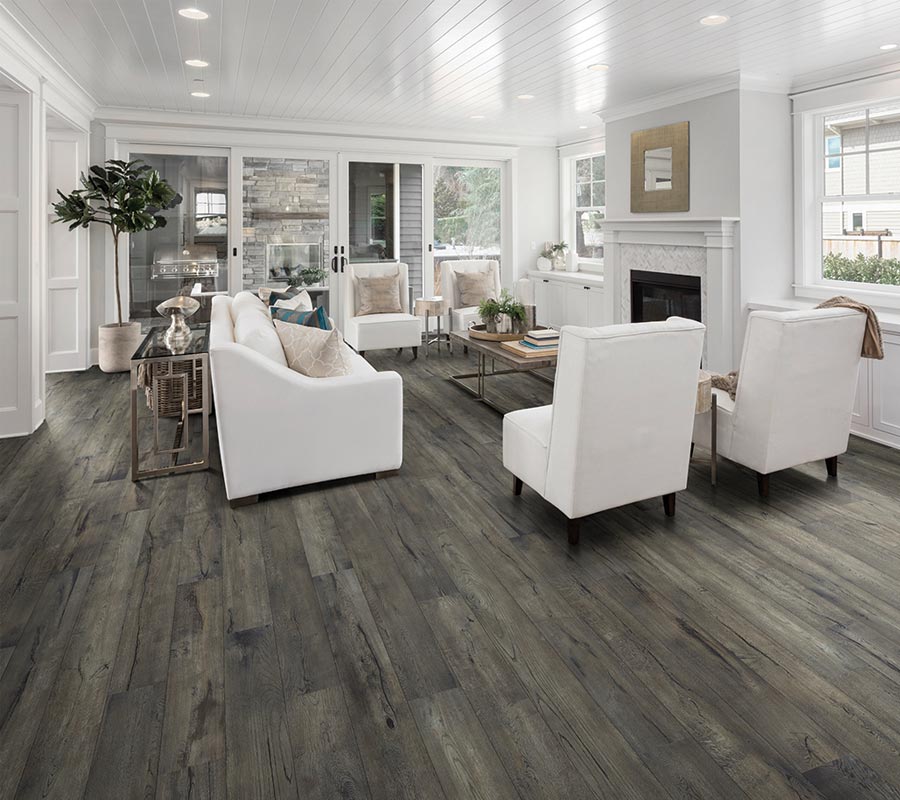
Color preferences in 2026 play directly to white oak’s strengths. The NWFA notes that light and natural tones remain in high demand, warmer browns are gaining ground with nearly half of members reporting more interest, and the cool gray floors of the last decade are fading. The reddish oak tones that were popular decades ago show no sign of a comeback, which is one reason red oak is now often stained to imitate the look of white oak.
Top choices for 2026: wide planks, matte finishes, and natural looks
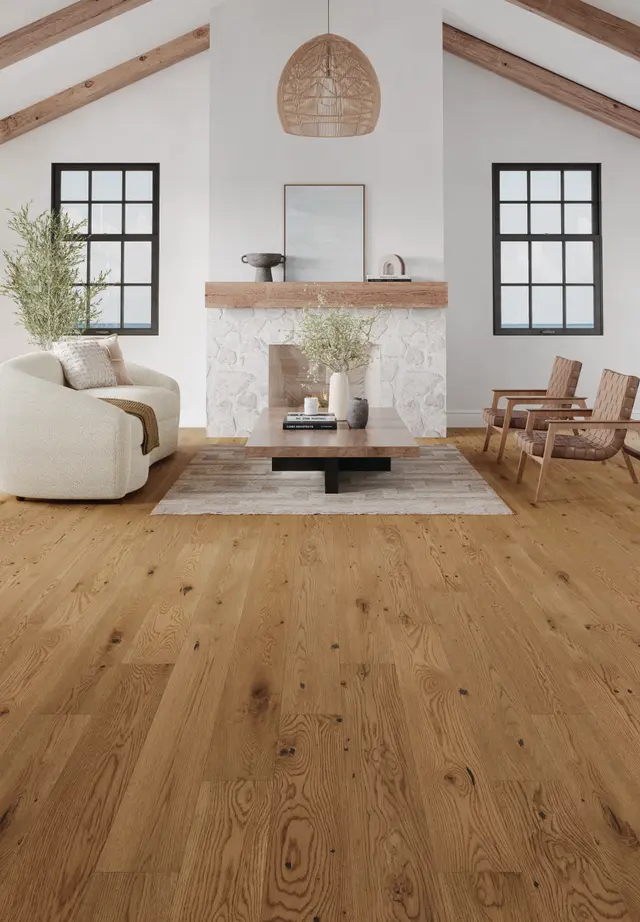
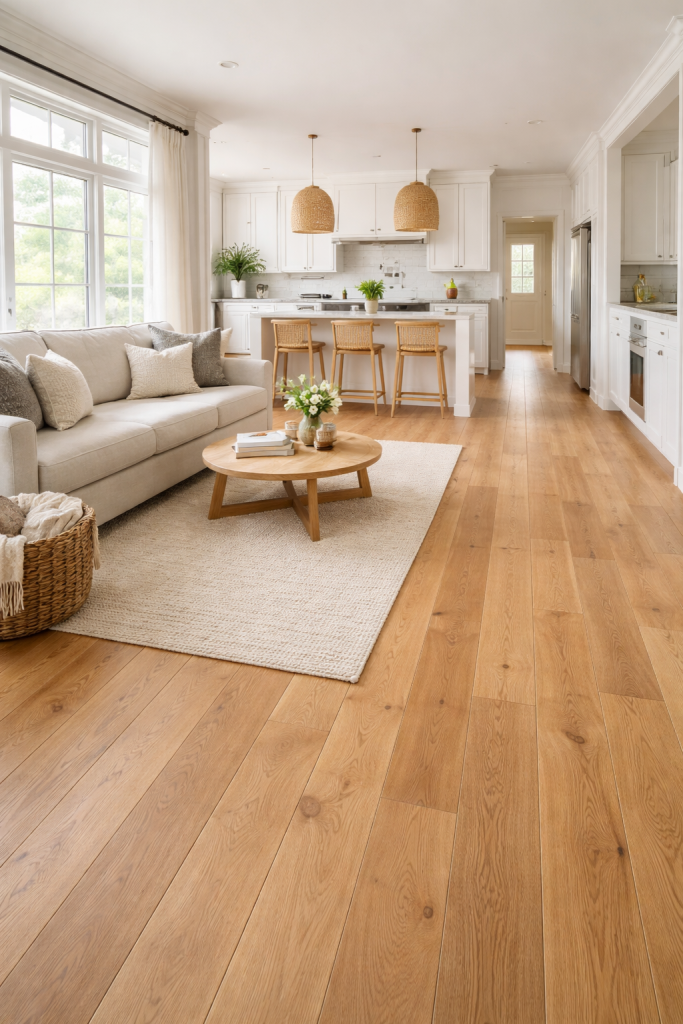
The most popular engineered white oak floors share a recognizable look in 2026. Planks are longer and wider than they were a decade ago, because wide boards reduce visible seams, make rooms feel more open, and show off more of the wood’s natural grain. The clean lines of mid-century modern design have pushed this preference even further.
Matte and low-gloss finishes are the other defining feature. Shiny, high-gloss floors reflect glare and highlight every scratch, while matte sheens look softer and help hide everyday wear. That makes them a practical match for open floor plans with large windows and lots of natural light. Mordor Intelligence notes that matte and low-gloss finishes are now commonly specified in open-plan spaces, often paired with aluminum oxide or ceramic-reinforced wear layers for extra abrasion resistance.
Texture is having a moment too. Wire-brushed and lightly hand-scraped surfaces add depth and character while making small dents less noticeable, which appeals to families with kids and pets. Pattern layouts such as herringbone and chevron are also showing up more often in entryways, dining rooms, and kitchens, frequently in engineered white oak. Sustainability rounds out the list, with more buyers asking for FSC-certified wood and low-emission products that carry certifications such as FloorScore.
How much does engineered white oak cost, and is it worth it?
Engineered hardwood typically costs less to install than solid hardwood. A 2026 cost guide from Hallmark Floors puts engineered hardwood at roughly $7 to $20 per square foot installed, compared with $10 to $25 for solid hardwood. Labor generally runs $3 to $8 per square foot, and complex patterns such as herringbone can push labor to $8 to $12 or more. Removing old flooring adds another $1.50 to $4.50 per square foot. White oak itself falls in the mid-range for material cost, pricier than red oak but far more affordable than exotic species.
There is one tradeoff to weigh. Solid hardwood can be sanded and refinished many times over its life, while engineered floors can typically be refinished only about 4 to 6 times, depending on the thickness of the wear layer, according to Inch Calculator. For most homeowners that still means decades of use, but it is worth choosing a product with a thicker wear layer if you plan to stay in the home long term.
The resale numbers make a strong case for real wood. The National Association of Realtors 2022 Remodeling Impact Report estimated that installing new wood flooring recovers about 118% of its cost at resale, while refinishing existing hardwood recovers about 147%. Those were the two highest-returning interior projects in the report. Buyer demand backs this up, too. NWFA surveys show that nearly 70% of people find wood floors highly attractive and two-thirds would choose them for their dream home.
Wood-look alternatives such as luxury vinyl plank and laminate remain cheaper upfront, and two-thirds of NWFA members say those products are taking some sales from real wood. Still, the fact that so many alternatives try to copy the look of white oak says a lot about where buyer taste sits in 2026. For homeowners who want the genuine article, engineered white oak offers the best balance of price, performance, and resale appeal.
How to care for engineered white oak floors
Durability is the top priority for flooring shoppers, with 94% of NWFA retailers naming it as the leading feature customers consider. The good news is that engineered white oak is easy to keep looking new with a few simple habits.
Dry cleaning does most of the work. Sweep or vacuum with a hard-floor setting a few times a week to remove grit, since fine sand acts like sandpaper under shoes. When you need a deeper clean, use a microfiber mop that is only lightly damp along with a cleaner made for finished wood floors. Avoid steam mops, wax, oil soaps, and standing water, all of which can damage the finish or seep into seams.
Prevention matters just as much as cleaning. Felt pads under chair and table legs stop most scratches before they start, and doormats at every entrance catch dirt before it reaches the floor. Keeping indoor humidity between roughly 35% and 55% helps any wood floor stay stable through the seasons. When the finish eventually starts to look dull in high-traffic areas, a professional screen and recoat can refresh it without a full sanding, saving the wear layer for years to come.
The bottom line
Engineered white oak is the most popular type of wood flooring in 2026, and the data explains why. Engineered wood is now the largest product category in a global market worth more than $52 billion, white oak is the top species for 63% of NWFA professionals, and new wood floors return about 118% of their cost at resale. Add wide planks, a matte finish, and a warm natural tone, and you have the floor that defines this year’s homes. If you are choosing new flooring, it is a safe bet that will still look current for decades.
Frequently asked questions
What is the most popular wood flooring in 2026?
Engineered white oak is the most popular choice. Engineered wood holds the largest share of the global wood flooring market, and white oak is the preferred species of 63% of NWFA members.
Is engineered hardwood real wood?
Yes. Engineered hardwood has a top layer of real hardwood bonded to a stable plywood or fiberboard core, so the surface you see and walk on is genuine wood.
Is engineered hardwood cheaper than solid hardwood?
Usually. Installed costs for engineered hardwood typically run about $7 to $20 per square foot, compared with about $10 to $25 for solid hardwood, though premium engineered products can match solid pricing.
Can engineered white oak go in a basement or kitchen?
Engineered flooring is far more stable than solid wood, so it can be installed over concrete and below grade, including many basements. Kitchens are fine with prompt cleanup of spills, but bathrooms and areas with standing water are better suited to tile or waterproof products.
Do hardwood floors increase home value?
They do. NAR’s 2022 Remodeling Impact Report estimated that new wood flooring recovers about 118% of its cost at resale and refinishing existing floors recovers about 147%.