Walk through almost any neighborhood in Charlotte — Dilworth, Plaza Midwood, Elizabeth, Myers Park, or one of the newer builds out toward Ballantyne — and you’ll find hardwood underfoot in some of the city’s most desirable homes. It’s part of what gives these houses their character, and it’s also one of the first things a buyer notices on a walkthrough. But hardwood floors age differently depending on foot traffic, humidity, and how long it’s been since anyone touched them, and that raises a question we hear often at Fabricio Hardwood Floors: does this floor need a full refinish, or would buffing and coating do the job for less money and less disruption?
The two services get lumped together a lot, partly because both leave a floor looking shinier and newer. But they are not interchangeable, and choosing the wrong one either wastes money or leaves the underlying problem untouched. Understanding the difference — and knowing which one your Charlotte home actually needs — can save homeowners real money and a lot of frustration.
Buffing and coating
Buffing and coating, sometimes called screening and re-coating, is a surface-level refresh. A technician lightly abrades the existing polyurethane finish with a buffer and fine mesh screen, cleans away the dust, and applies a fresh topcoat. The wood itself is never touched — only the finish layer sitting on top of it is worked on. Because there’s no sanding involved, the process is fast, quiet, and produces very little dust, which matters if you’re trying to keep a household running normally during the work. Most rooms can be recoated and walked on again within a day or two.
Hardwood floor refinishing
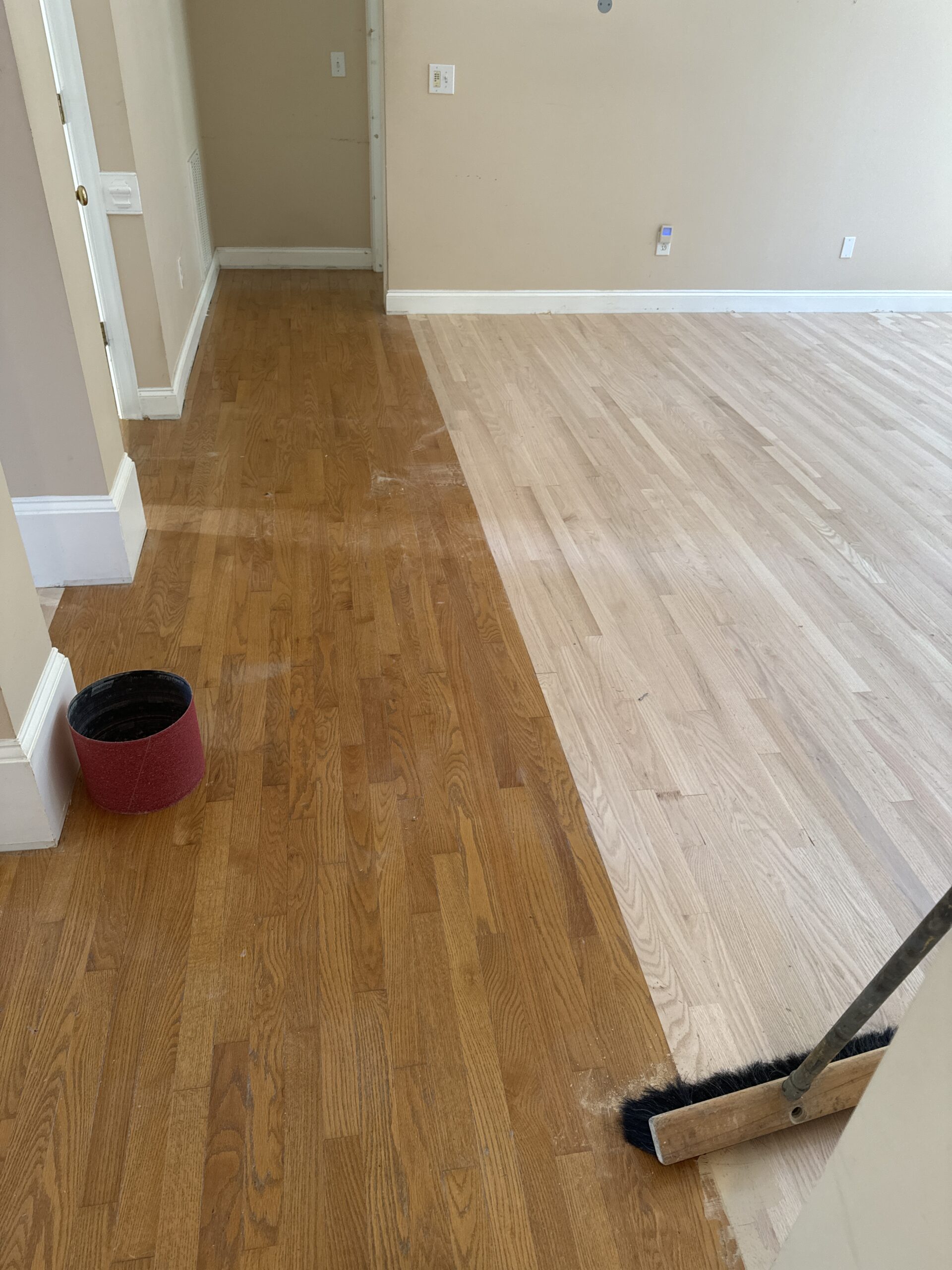
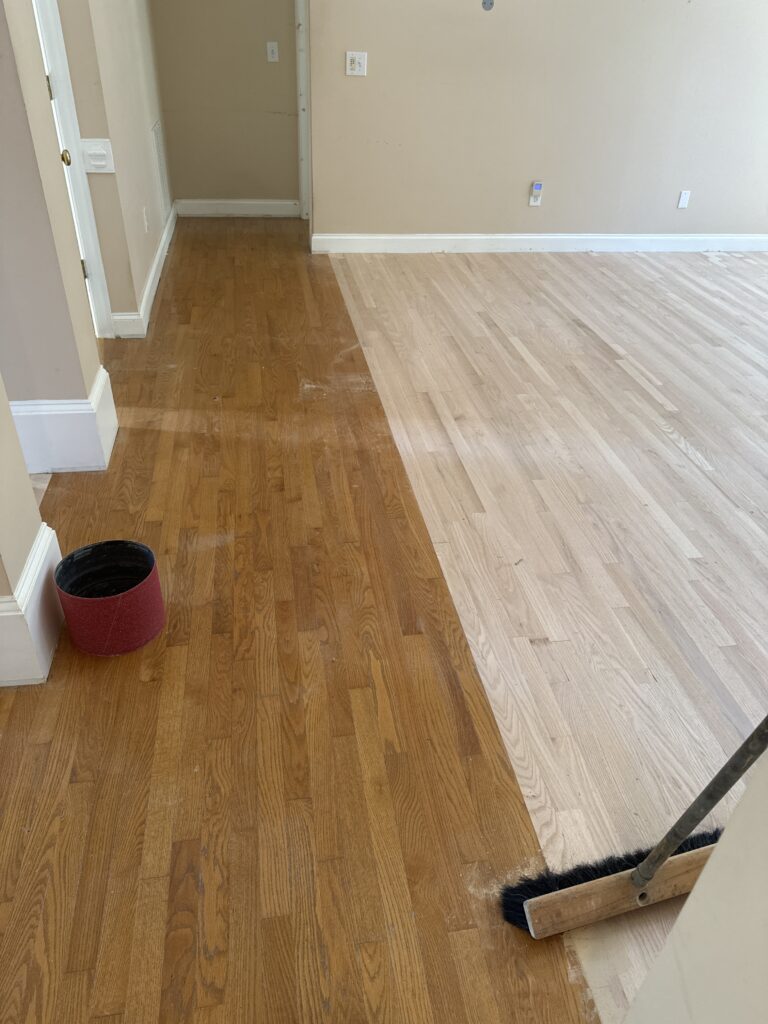
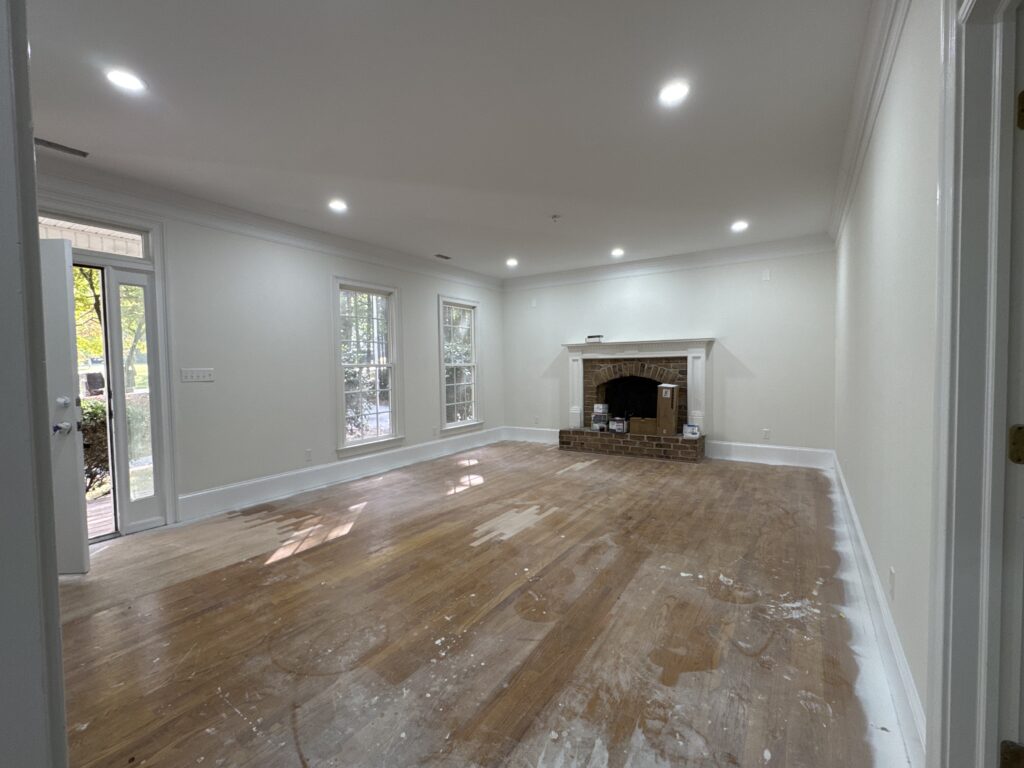
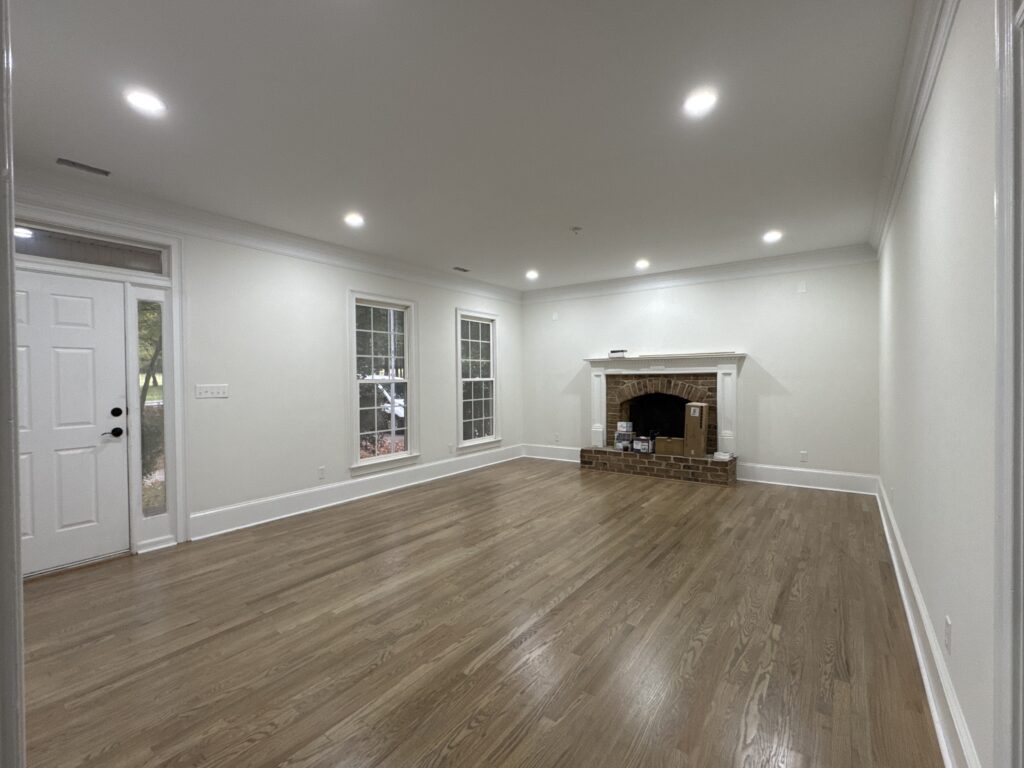
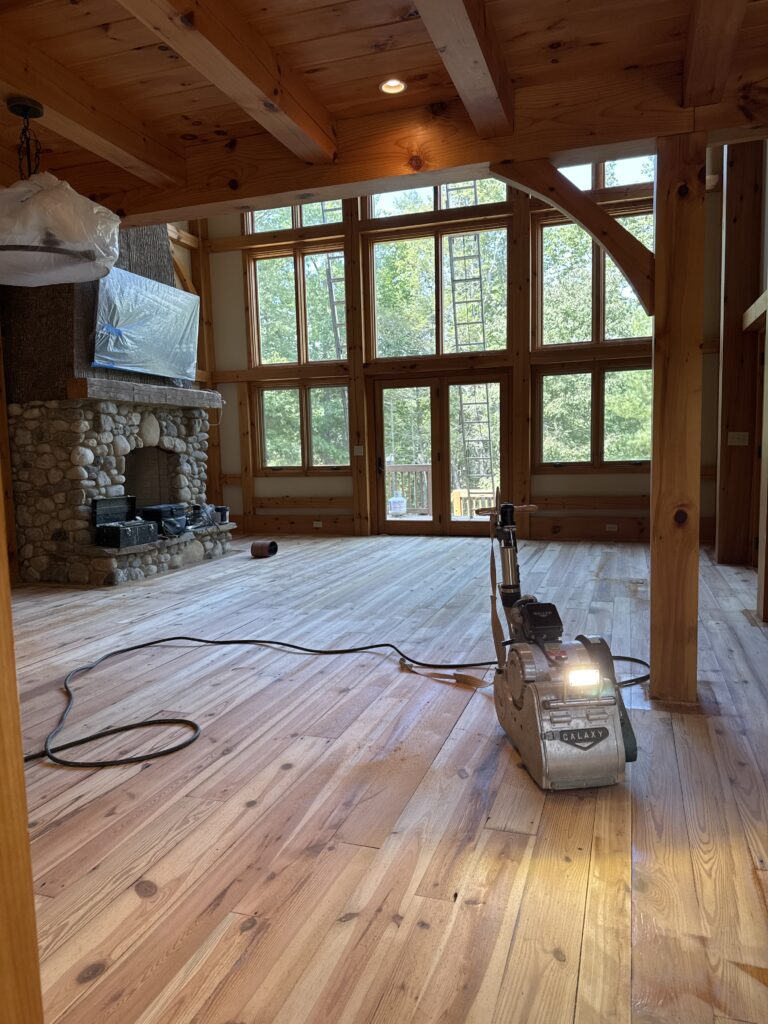
Wood floor refinishing is a different undertaking entirely. It means sanding the floor down to bare wood, removing every trace of the old finish along with years of scratches, sun fading, and stains, then applying new stain and several coats of sealer. It’s a bigger job — typically two to three days for an average-sized home, with furniture cleared and floors off-limits until the finish cures — but it’s the only way to fix damage that lives in the wood itself rather than just on its surface.
The mistake we see most often is a homeowner requesting a recoat on a floor that actually needs refinishing. Buffing and coating cannot fix deep gouges, cannot lighten dark spots left by pet accidents, and cannot flatten boards that have cupped or warped from moisture. Those problems live below the finish line, and no amount of surface buffing reaches them. On the other hand, plenty of Charlotte homeowners pay for a full refinish when their floor’s only real issue is a dull, worn topcoat — a problem a recoat would have solved at a fraction of the cost.
How Charlotte’s climate factors in
Charlotte’s humid subtropical climate puts real stress on hardwood that homeowners in drier regions rarely have to think about. Wood expands as humidity climbs through our long, muggy summers and contracts again once the heat breaks in fall, and that constant movement is exactly what accelerates finish wear around high-traffic areas like entryways, kitchens, and hallways. It’s also why so many of the historic homes in Charlotte’s older neighborhoods — houses built well before central air conditioning was standard — show finish wear unevenly, with some rooms holding up far better than others depending on sun exposure and airflow. A trained eye can usually tell within a few minutes of walking a floor whether that unevenness is cosmetic or structural, which is the whole difference between the two services.What each option actually costs
Nationally, a full sand-and-refinish job runs roughly three to eight dollars per square foot, depending on the wood species, the condition of the floor, and the finish selected. A screen and recoat typically runs one to three dollars per square foot — often less than half the cost of a full refinish for a comparable space. For a mid-sized Charlotte home, that difference can easily mean a few thousand dollars, which is exactly why getting an accurate diagnosis before committing to either service matters so much.
There’s also a strong financial case for keeping hardwood in good shape at all, rather than replacing it or covering it over. A 2022 study from the National Association of Realtors and the National Association of the Remodeling Industry found that refinishing hardwood floors recovered roughly 147 percent of its cost in added home value — the highest return of any project the study measured, ahead of new flooring installs, kitchen updates, and bathroom remodels. In a market like Charlotte’s, where the median home recently sold around $431,000 and listings routinely go under contract in about three and a half weeks, floor condition genuinely factors into how a buyer perceives a home the moment they walk in the door.
As a general rule of thumb in the trade, a well-maintained floor can go three to five years between recoats before it needs a full refinish, though heavy-traffic households, homes with large dogs, or floors that haven’t seen any maintenance in a decade or more will usually need to go straight to sanding.
How we make the call at Fabricio Hardwood Floors
We don’t sell refinishing jobs to homeowners who only need a recoat, and we don’t recommend a quick buff on a floor that’s going to look the same six months later because the real problem was never addressed. Every estimate starts with an in-person look at the wood itself — checking finish depth, board condition, and moisture levels — because that’s the only reliable way to know which service actually solves the problem in front of us.
If you’re staring at a Charlotte hardwood floor that’s lost its shine and you’re not sure which route makes sense, that’s exactly the conversation worth having before any work begins. Fabricio Hardwood Floors has spent years reading Charlotte floors block by block, and we’re glad to walk yours with you (check some of our latest work) To get started, give us a call today (704) 770-1028 or submit a request through our website.